
WooCommerce and Shopify stores engineered to sell – built for South African payments, POPIA, and Google & AI search. Most e-commerce websites are built to look like stores. Few are built to sell. We build fast, well-structured WooCommerce and Shopify stores with strong CRO foundations and clear SEO – engineered for the South African checkout reality, from the first browse to the PayFast confirmation page and beyond.
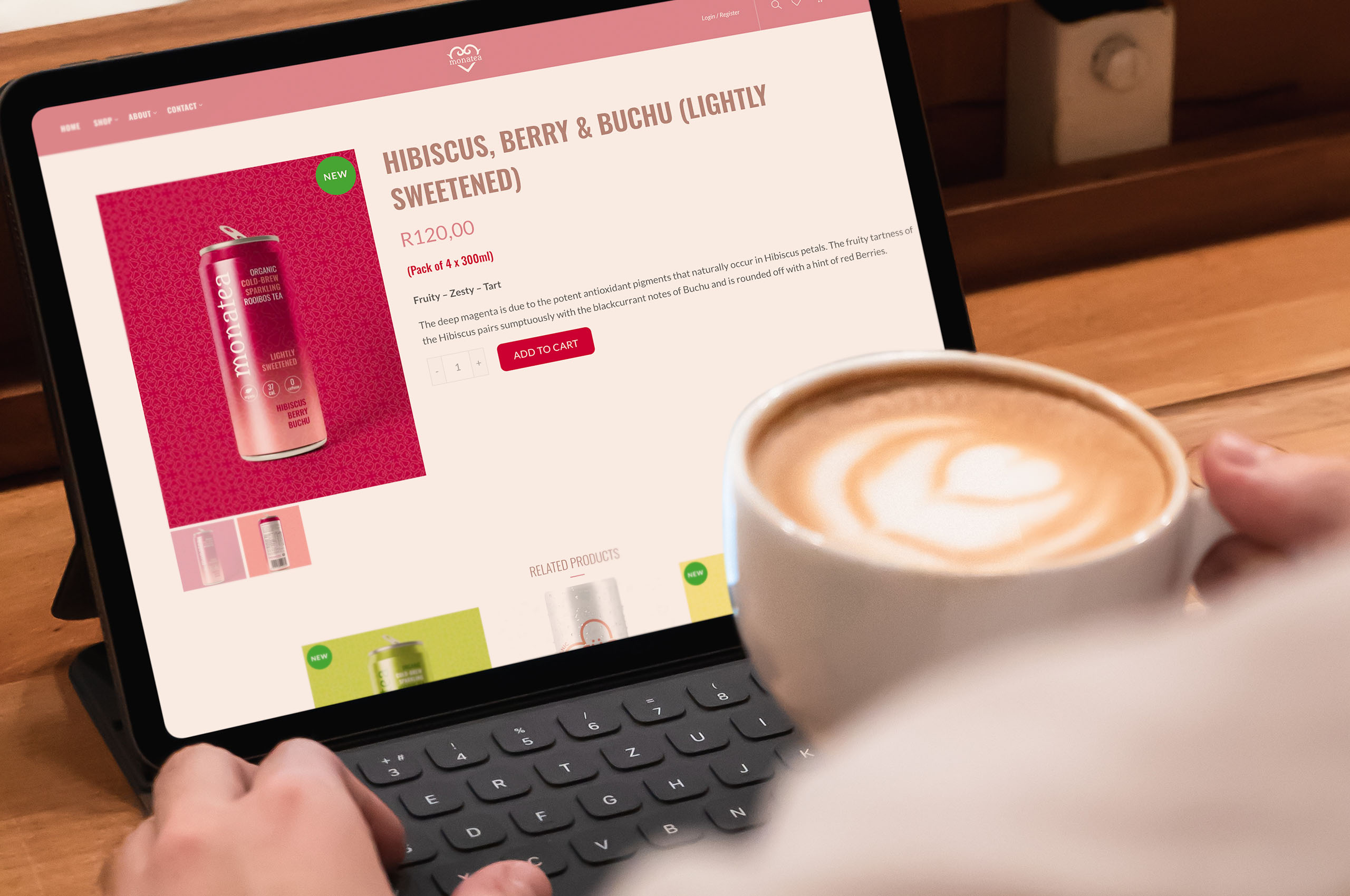
Kijo Digital builds e-commerce websites for Cape Town businesses on WooCommerce and Shopify, with integration for PayFast, Yoco, and Peach Payments, ZAR/VAT invoicing, local courier setup, POPIA-compliant consent, and product-level SEO. Every store is designed for the South African checkout experience and optimised to be easily found in both Google and AI search.
E-commerce website design is building an online store structured to convert browsers into buyers, from the first product view through to a successful, locally relevant payment.
An online store is only as good as its conversion rate. Too many South African stores look fine on the surface but lose customers at every step – slow mobile load speeds, confusing navigation, untrustworthy checkout, or payment options that skip the local methods SA shoppers actually use. We build stores engineered to sell, from the first browse to the PayFast or Yoco confirmation page and beyond.
Anyone can build something that looks polished. If aesthetics are your only goal, cheaper options exist. What very few agencies understand is how to build a WordPress website that consistently converts visitors into paying clients. Most designers stop at the visual layer. We start with your data. We look at where visitors drop off, what stops them from converting, and what your competitors are doing wrong – then we build a site that addresses all of it before a single pixel is designed.
We’ve worked with businesses at 400,000+ monthly visitors and with companies just starting to scale. That range gives us a clear view of what actually works across industries and traffic levels.
Start with design, assume the rest follows
No analytics review before building
Hand over the site and disappear
Strategy and data first, design second
Full audit before any design begins
Ongoing testing and optimisation post-launch
Running an e-commerce store means managing more conversion variables than almost any other type of website. Product pages, category architecture, checkout flow, cart abandonment, site speed, mobile UX, and SEO all interact – and a weakness in any one of them suppresses revenue across the entire store. Here’s what we find most consistently when we audit WooCommerce sites:
Most stores convert under 2%, meaning the majority of visitors leave without purchasing. CRO identifies friction, improves user flow, and turns existing traffic into measurable revenue growth without increasing ad spend.
Thin content, poor structure, and missing keyword strategy limit visibility. Strong SEO architecture across product and category pages captures high-intent traffic and drives consistent, purchase-ready visitors to your store.
Slow load times from heavy assets and scripts reduce rankings and increase drop-offs. Performance optimisation improves user experience, boosts SEO visibility, and increases conversions across all traffic sources.
Unexpected costs, too many fields, and poor mobile usability cause cart abandonment. Optimising checkout reduces friction, improves completion rates, and turns more purchase intent into completed transactions.
Most traffic comes from mobile, but poor layouts and usability reduce conversions. A mobile-first experience improves navigation, reduces friction, and converts a higher percentage of mobile users into customers.
Without upsells or retention flows, revenue stops after the first purchase. Strong post-purchase strategy increases customer lifetime value and drives repeat revenue from existing customers.
WooCommerce suits most SA businesses wanting control, no transaction fees and SEO flexibility; Shopify suits those wanting faster setup and managed hosting, at a monthly cost.
This is the most important decision in any SA e-commerce project. After 10 years of building both, here’s the honest breakdown. We build both – and recommend the right platform for your specific business during the strategy call.
| Factor | WooCommerce (WordPress) | Shopify |
|---|---|---|
| Transaction fees | None | Fees unless using Shopify Payments (not available in SA) |
| SA payment gateways | Native PayFast, Yoco, Peach | Via third-party gateways |
| Ongoing cost | Hosting only | From $39 USD/month |
| Design freedom | Complete | More limited |
| SEO control | Full | Good, less flexible |
| Setup speed | Slower, more custom | Faster, more managed |
| Best for | Complex catalogues, SEO focus, no platform fees | Simplicity, faster launch, managed hosting |
It needs local payment gateways, ZAR and VAT setup, SA courier integrations, POPIA-compliant consent, and a fast mobile-first checkout – the operational details international templates miss.
Building for South African customers is different from building for international markets. On every SA project, we address local payment gateways (PayFast, Yoco, Peach, SnapScan, instant EFT – a store accepting only Stripe or PayPal loses a large share of SA shoppers); proper ZAR pricing with SARS-compliant VAT invoicing; local courier integrations (Courier Guy, RAM, Pargo, PostNet) with automated rate calculation; POPIA-compliant consent and data handling, as the POPI Act requires; and a mobile-first checkout, since most SA shoppers buy on mobile, often on limited data.
A structured, performance-driven process designed to improve visibility, increase conversions, and turn your e-commerce store into a scalable revenue channel.
We review your store performance including conversion funnel, product pages, SEO rankings, site speed, and checkout data, or benchmark competitors.
We define category structure, product templates, internal linking, and keyword intent to ensure your store captures searches and supports conversions.
We design every page mobile-first, optimising layouts, checkout flow, and site speed to ensure strong performance and conversions across all devices.
We implement analytics, conversion tracking, and heatmaps before launch, then use real data to identify opportunities and improve conversion performance continuously.
Everything your store needs to attract high-intent traffic, convert more visitors into customers, and scale revenue through performance, SEO, and data-driven optimisation.
Custom WooCommerce websites built for growth, featuring intuitive navigation, SEO-friendly architecture, streamlined checkout experiences, and mobile-first design that helps convert visitors into customers.
Comprehensive e-commerce SEO targeting product, category, and transactional keywords. Improve search visibility, attract qualified traffic, generate sustainable organic revenue growth, and increase online sales.
Data-driven conversion rate optimisation focused on product pages, customer journeys, and checkout performance. Continuous testing and improvements help increase conversions and maximise store revenue.
Seamlessly migrate products, customers, and content to WooCommerce without losing SEO value. Build a scalable e-commerce platform designed for long-term growth and flexibility.
A detailed website audit identifying SEO, performance, and conversion opportunities. Receive a clear roadmap designed to improve visibility, increase sales, and support long-term growth.
Proactive website maintenance including updates, security monitoring, backups, and technical support. Keep your WooCommerce store secure, stable, and operating at peak performance.
E-commerce websites start from around R15,000 for a template-based store, with custom WooCommerce or Shopify builds from R50,000 and larger, complex stores at R75,000–R120,000+.
All projects are fixed-price, scoped after the strategy meeting, so there are no surprises. The right starting point depends on your catalogue size, design needs and how much custom functionality you need. Here’s what moves the number.
| Project type | Typical range | What’s included |
|---|---|---|
| Small / template-based store | From R15,000 | Theme-based design, core payment & shipping setup, essential product pages – ideal for small catalogues |
| Custom WooCommerce / Shopify store | From R50,000 | Custom design, payment gateway, SA shipping, product SEO, GA4 e-commerce tracking |
| Larger / complex catalogue | R75,000–R120,000+ | Complex products, custom API integrations, advanced functionality |
| Ongoing care plan | From R2,000/month | Updates, gateway testing, security, performance, CRO |
Yes – PayFast, Yoco, Peach and most SA gateways are standard on every build, tested in both sandbox and live environments before launch.
Payment hand-off is where SAs quietly lose sales. We test every flow end-to-end so the path from cart to confirmation never breaks – with POPIA-compliant consent and SARS-compliant VAT invoicing built in.
Yes. Clear product and category answers plus structured data make your store eligible to be cited by AI assistants when shoppers ask what to buy and where.
Shoppers increasingly ask AI assistants for product recommendations. The same product schema and clean content that earn Google rich results make your catalogue quotable by AI – so it works in both channels, not just one.
We structure SEO across your catalogue with keyword-focused category pages, optimised product titles, schema markup, XML sitemaps, and strategic internal linking to improve visibility.
Yes. We migrate Shopify, custom, and legacy e-commerce stores to WooCommerce while preserving products, customer data, order history, URLs, and SEO performance.
Every build includes a custom storefront, platform setup, payment integration, courier integration, product SEO, analytics tracking, compliance setup, training, and post-launch support.
Our custom e-commerce websites typically start from R20,000, depending on the number of products, integrations, and project requirements. Most WooCommerce and Shopify stores include payment gateway integration, courier setup, product SEO, analytics tracking, and conversion-focused design. Larger or more complex stores are quoted based on scope and functionality.
Both are excellent; the right choice depends on your business. WooCommerce gives more control, no transaction fees, better SEO flexibility and full ownership. Shopify offers a managed experience with faster setup but ongoing monthly costs. We recommend the right one during your strategy call.
Yes. Monthly care plans cover platform and plugin updates, payment gateway testing, security monitoring and performance checks, plus ongoing CRO. Retainers from R2,000/month.
Yes. Every SA build includes POPIA-compliant consent flows, a privacy policy, cookie consent and compliant data-handling structures, because any store collecting customer information is subject to the Act.
Yes. We configure abandoned cart tracking and recovery flows so potential customers who drop out of checkout are followed up automatically - recovering revenue that would otherwise be lost.
We set up Google Analytics 4 with full e-commerce tracking and Search Console, so you can see traffic sources, product views, add-to-carts, checkout drop-off and revenue - and make informed decisions about where to invest.




2.4K+ Reviews
Get a free quote for your e-commerce project. We’ll review your current store or brief, identify the biggest conversion and visibility opportunities, and outline what a build or optimisation engagement would look like – no commitment required.
Conversion-focused WordPress websites for travel, hospitality and performance-driven businesses.
© 2026 Kijo Digital. All rights reserved.