
The three businesses in Google’s local map pack win most of the calls. Here is how a South African appliance repair business earns one of those spots, from your Google Business Profile to service-area pages, step by step.
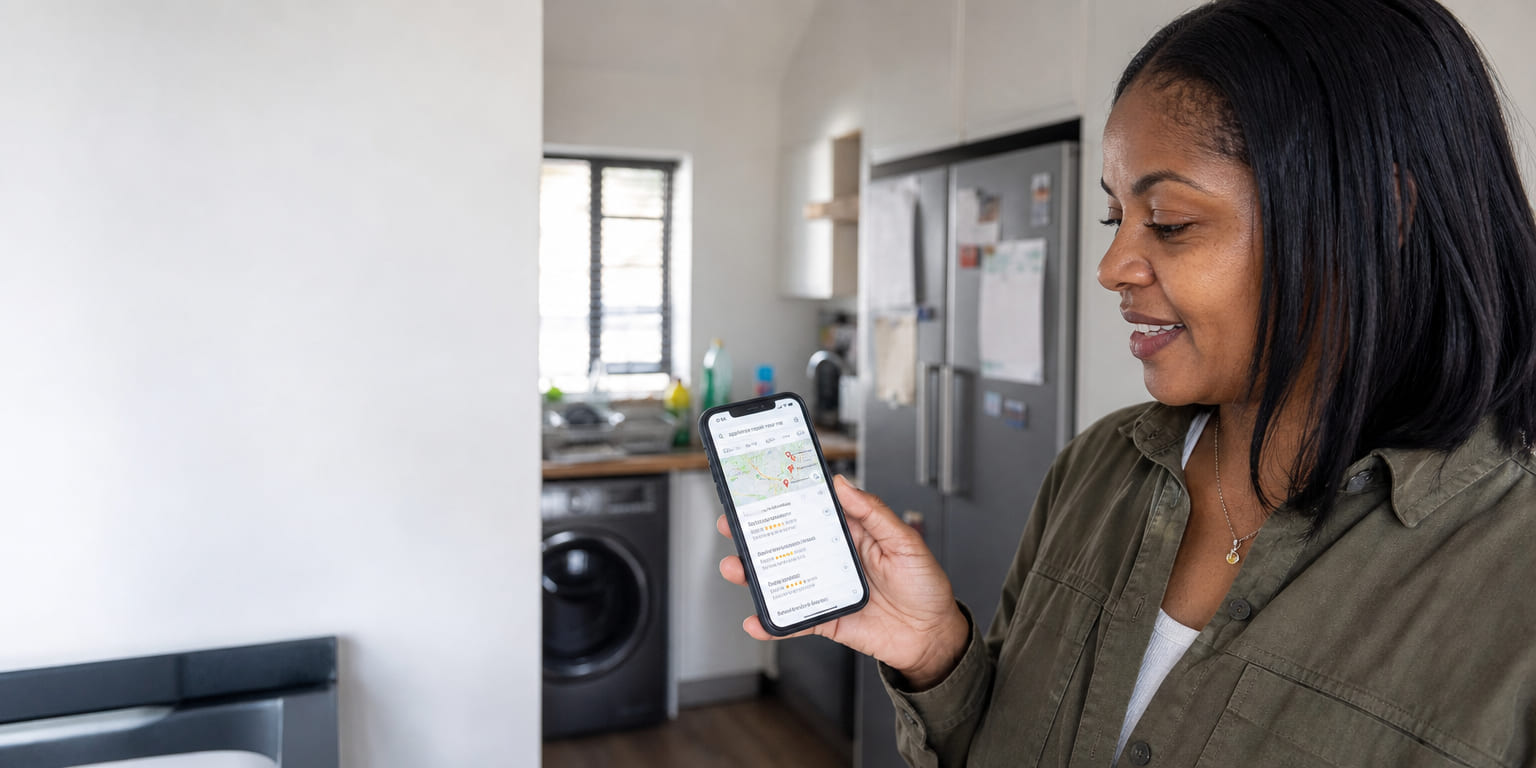
The Google map pack, sometimes called the local pack, is the block of three business listings shown with a small map near the top of local search results. When someone searches “appliance repair near me” or “fridge repair” with a suburb, that map and its three businesses usually appear above the ordinary blue-link results. Each listing shows the star rating, review count, hours and a call or directions button.
For an appliance repair business, this is the most valuable piece of real estate on the internet. It sits at the top, it shows exactly the trust signals a worried customer is looking for, and it lets them call you without even opening your website. Winning one of those three spots in the suburbs you serve is the single highest-leverage thing local SEO does for a repair business.
The map pack shows only three businesses, and on a phone they fill the screen. Most people searching for an urgent repair pick one of those three and call. If you are not in the pack for your area, you are competing for the much smaller share of attention that scrolls further down.
Appliance repair is urgent and local, which is the exact combination the map pack is built for. Nobody researches fridge repair for a week. They search, glance at the top three, check the ratings, and call. Because the intent is so high and the decision so fast, ranking in the pack does not just bring more visitors, it brings people ready to book, at the moment they are ready.
There is also a South African wrinkle worth planning for. Power interruptions and surges damage fridges, freezers and electronics, so demand for repairs spikes in waves rather than arriving evenly. When a wave hits, everyone searches at once, and the businesses already sitting in the map pack absorb most of that sudden demand. You cannot climb into the pack overnight when the rush arrives, which is why the work below is worth starting now, before the next spike.
“Ranking in the map pack does not just bring more visitors. It brings people ready to book, at the moment they are ready.”
Google decides the local three on a blend of three things. Understanding them tells you exactly where to put your effort.
Proximity you mostly inherit. Relevance and prominence you earn, and the seven steps below are how you earn them.
Work through these in order. The first four live inside Google Business Profile; the last three live on your website and across the web. Together they cover all three ranking factors.
Your profile is the listing that appears in the map pack, so a half-finished one is a half-finished ranking. Claim it, verify it, and fill in every field: business name, phone, website, hours, services, and a genuine set of photos of your team, van and work. A complete profile outranks a bare one, all else equal.
Do thisAdd your real services (fridge repair, washing machine repair, and so on), set accurate hours, and upload real photos. Keep it current, because activity and freshness help.
Categories are one of the strongest relevance signals Google uses. Your primary category should be Appliance repair service. Then add accurate secondary categories for what you actually do, such as refrigerator repair service, washer and dryer repair service, or small appliance repair service. The right categories put you in the running for the right searches.
Do thisSet one precise primary category and only add secondary categories you genuinely offer. Do not pad the list with unrelated ones, which can muddy your relevance.
Most appliance repair businesses go to the customer, so you should be set up as a service-area business, listing the suburbs and areas you cover rather than relying only on one map pin. Being honest and specific here helps you appear across the areas you actually serve, and keeps you credible with both Google and customers.
Do thisList the real suburbs you cover, from the City Bowl to the Northern and Southern Suburbs if that is your patch. Resist the urge to claim half the province, which weakens rather than widens your reach.
Reviews are the biggest prominence lever you control, and they double as the trust signal customers scan before calling. What matters is a steady flow of genuine, recent reviews, more than the competitors you want to outrank, ideally mentioning the appliance and area. Replying to each one, good or bad, signals an active, real business.
Do thisAsk every happy customer for a Google review the day the job is done, with a direct link. Reply to all of them. A simple, polite ask at the right moment is the whole game.
Google reads your website to judge how relevant you are to a place and a problem. A single “services” page cannot signal that you fix Defy ovens in Bellville. Dedicated pages for the suburbs you serve and the appliances and brands you fix give Google, and customers, a clear match, and they support your map-pack ranking as well as ranking in the normal results.
Do thisCreate genuine, useful pages per key suburb and per major appliance and brand. This is the same page structure that underpins a well-built appliance repair website, and it is worth doing properly rather than spinning up thin duplicates.
If your business name, address and phone number differ between your website, your Google profile and the directories you are listed on, Google trusts you less and your prominence suffers. Consistency across the web, sometimes called citations, quietly holds your local ranking together.
Do thisWrite your name, address and phone exactly the same way everywhere, and fix the old listings that still show a previous number or spelling. Match, do not paraphrase.
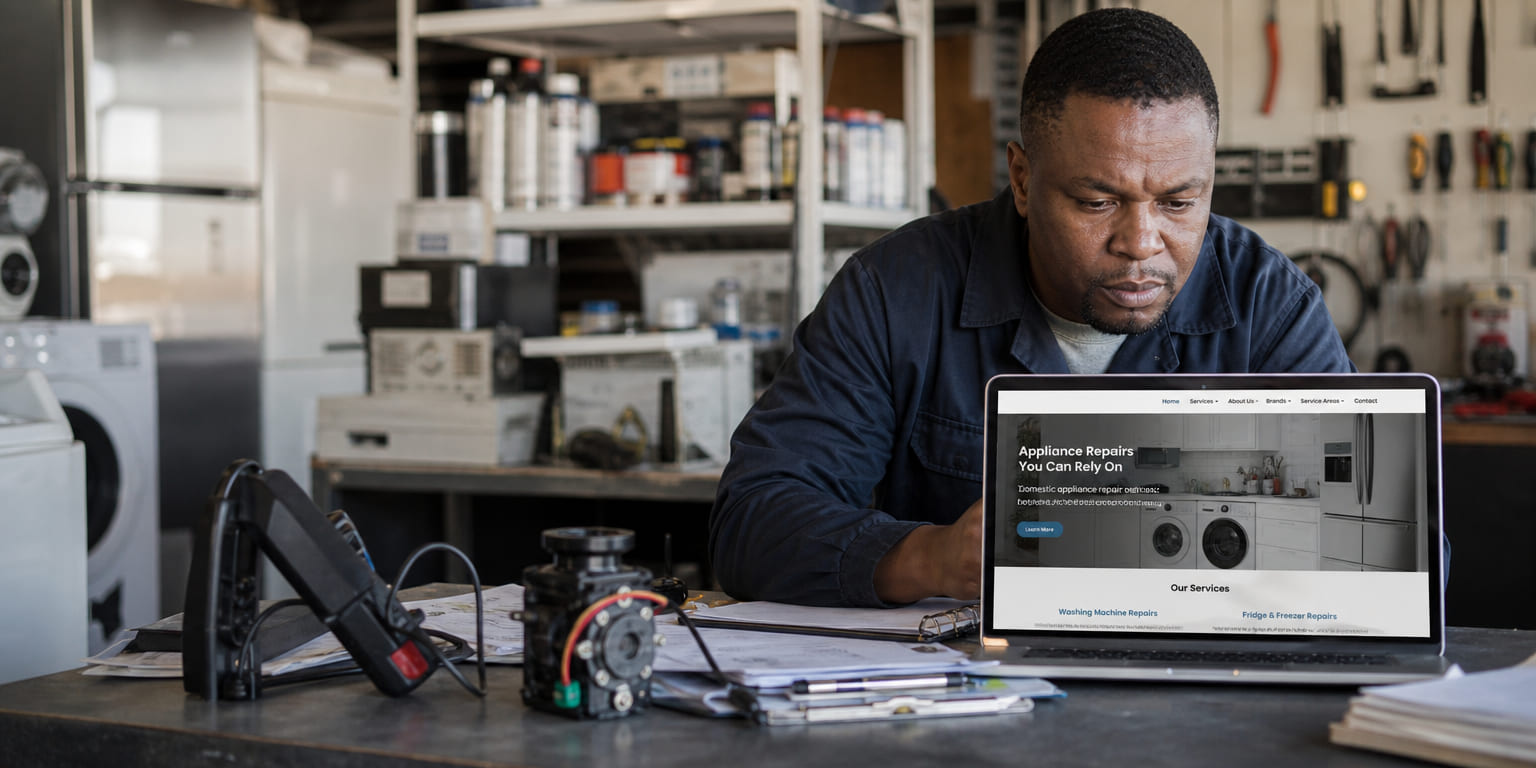
Because the map pack sends people to your profile and often on to your site, a slow or vague website undercuts everything above it. A fast, mobile-first site that clearly states where you work and what you fix reinforces your relevance and converts the visit into a call.
Do thisEnsure the site loads quickly on mobile data and names your areas and services plainly. Strong local SEO foundations and a fast build are what turn a map-pack listing into booked jobs.
Most repair businesses that struggle in local search are making one or two of these avoidable errors.
Run your own site against all ten. Tick each one you can honestly say you have right; your score updates as you go. Anything you cannot tick is very likely costing you calls.
Start inside Google Business Profile this week. Claim and complete it, fix your categories, list your real suburbs and ask your recent happy customers for a review. Those steps need no developer and often move your visibility within weeks, especially for less contested suburb searches.
The parts that compound, service-area and brand pages, a genuinely fast site, consistent listings across the web, are where a properly built site does the heavy lifting, and where our local SEO and website design work continues after the profile is sorted. And once you are visible, the next question is whether that visibility turns into calls, which is exactly what we cover in our guide on why appliance repair websites get traffic but no calls.
The Google map pack, also called the local pack, is the block of three business listings shown with a map near the top of local search results. For searches like appliance repair near me or fridge repair plus a suburb, it usually sits above the regular results, so the three businesses shown there capture most of the calls.
A well-optimised Google Business Profile can start appearing for less competitive suburb searches within a few weeks. Competitive city-wide terms take longer, usually a few months, as reviews, consistent listings and website relevance build up. Local SEO is cumulative, so the earlier you start and the more consistent you are, the sooner and higher you rank.
You can rank as a service-area business without a public shopfront. In Google Business Profile you hide your address and instead list the suburbs and areas you serve. Most appliance repair businesses that go to the customer should be set up this way, with honest, specific service areas rather than an oversized region.
There is no fixed number. What matters is having more genuine, recent reviews than the competitors you are trying to outrank in your area, along with steady new ones over time and replies from you. Consistent, specific reviews that mention the appliance and suburb tend to help both ranking and the customer's decision to call.
Yes. Proximity means you rank strongest near your base, but a complete profile, genuine service areas, reviews and dedicated service-area pages on your website let you appear across the suburbs you cover. Ranking in a completely different city usually needs a real presence there, not just a listing.
I design and build conversion-focused websites for travel, hospitality and trade businesses, and I've set up bookings on all of these systems, WooCommerce most of all. This comparison reflects what actually works on real operator sites, not vendor marketing.
Book a free 30-minute strategy call. We'll help you choose the right booking system and build the WordPress site to run it, so more of every sale stays yours.
Book a free strategy call →