
Yes, and not just in the vague “trust matters” sense. Here’s exactly which parts of your review profile Google actually factors into local ranking.
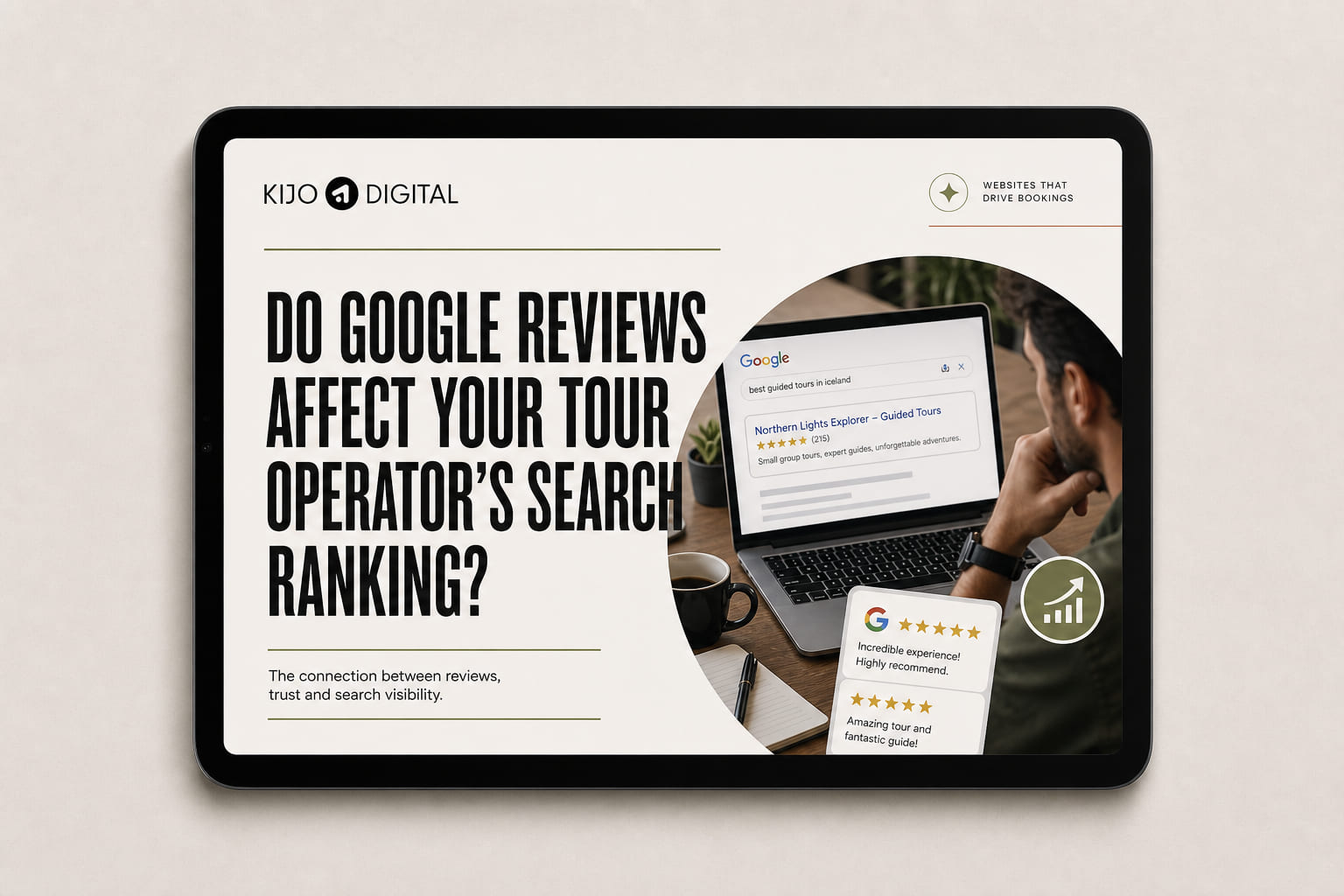
Yes. Review count, average rating and recency all factor into local search ranking, particularly for map pack visibility. It's one of the few ranking signals a small operator can influence directly, without waiting months for content or backlinks to take effect.
Local ranking, the kind that determines whether you show up in the three-result map pack for “tours in [destination],” draws on a different mix of signals than standard organic ranking. Reviews sit alongside relevance and proximity as one of the three broad factors Google has said it uses for local results, which is why two websites with similar SEO can still rank very differently in the map pack depending on their review profile.
This is covered in more depth, alongside the rest of your Google Business Profile setup, but the review-specific piece deserves its own explanation because it’s the part most operators either neglect or misunderstand.
Three things matter more than any single review’s content:
“A large batch of old reviews looks impressive at a glance and does very little for ranking. A slow, steady trickle of recent ones does more work than most operators expect.”
Ranking is only half of what reviews do. Even once you’re visible, the star rating and count are often the first thing a traveller notices, well before they read your copy, as covered in our guide on trust signals above the fold. A business that ranks well but has a thin or stale review profile still loses the click to a competitor with a stronger one sitting right next to it in the results.
We'll review your current Google Business Profile and website together and show you where reviews are, and aren't, doing their job, free, no obligation.
Never offer a discount, prize or incentive in exchange for a review. Never selectively ask only your happiest customers while ignoring everyone else. Never post or edit reviews on behalf of someone who didn't write them. Beyond being against Google's policies, these practices tend to produce a review profile that looks unnaturally perfect, which savvy travellers notice.
The practical takeaway is simple: build a steady, ongoing habit of asking for reviews after every completed tour, rather than a one-off push. Our guide on how to get more Google reviews without being pushy covers exactly how to do that, and it pairs directly with the SEO foundations covered in how to rank a tour operator website on Google. Our SEO services build review strategy into local SEO work rather than treating the two as separate tasks.
Yes. Review count, average rating and recency all factor into local search ranking, particularly for map pack visibility, alongside their separate and equally important effect on whether a traveller trusts you enough to click through and book.
Generally, but not in isolation. A large volume of old, static reviews tends to perform worse than a smaller but steadily growing collection of recent ones, since recency signals an actively operating, currently trustworthy business.
Its direct ranking effect is minor, but responding to reviews, especially negative ones, keeps a profile looking active and engaged, which supports the same trust signals that reviews themselves contribute to.
Not meaningfully on its own. Ranking responds to the overall pattern of reviews over time, not any single data point, so one negative review among many genuine ones has limited impact, especially if it's handled well.
I design and build conversion-focused websites for travel, hospitality and trade businesses, and I've set up bookings on all of these systems, WooCommerce most of all. This comparison reflects what actually works on real operator sites, not vendor marketing.
Book a free 30-minute strategy call. We'll look at your current review profile and local SEO together and show you what to fix first.
Book a free strategy call →