
A practical, non-pushy system for asking, including exactly when to ask, what to say, and how to handle the review that doesn’t go your way.
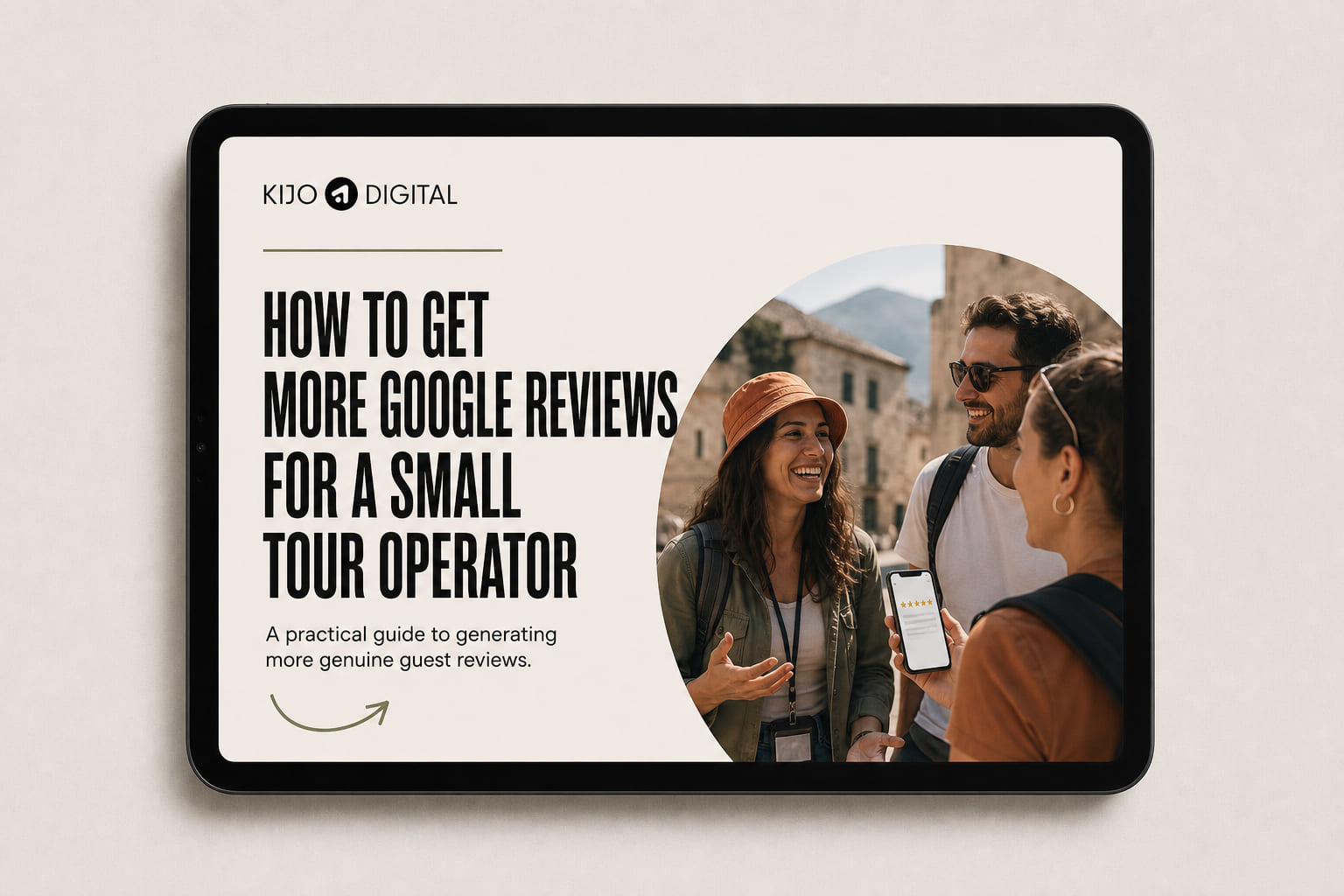
Google reviews do two jobs at once for a small tour operator, and most owners only think about one of them. The first is trust: a traveller deciding between your website and a competitor’s is heavily swayed by review count and rating, especially for a purchase they’ve never made with you before. The second is search visibility: review volume, recency and rating all factor into how Google ranks your business locally.
The good news is that neither of these requires a large marketing budget. It requires a simple, repeatable habit of asking at the right moment, in the right way.
Timing matters more than most operators realise. Ask too early and the traveller hasn’t had the full experience yet. Ask too late and the trip has faded behind everything else in their life.
We'll review your current site's starting point and give you an honest estimate of what's realistic and when, free, no obligation.
The difference between a request that feels natural and one that feels like nagging usually comes down to three things: keeping it short, making it easy, and asking only once.
“A short, well-timed message that treats the traveller like a person, not a marketing target, gets more genuine reviews than any incentive ever will.”
Meet travellers where they already are, rather than adding a new channel just for this.
Never offer a discount, prize or incentive in exchange for a review. Never selectively ask only your happiest customers while ignoring everyone else. Never post or edit reviews on behalf of someone who didn't write them. Beyond being against Google's policies, these practices tend to produce a review profile that looks unnaturally perfect, which savvy travellers notice.
A negative review isn’t a crisis, and it isn’t something to argue with publicly. Future travellers reading your profile pay close attention to how you respond, often more than to the complaint itself.
Collecting reviews only helps if travellers see them at the moment they’re deciding whether to book. Reviews shown directly on your tour pages, close to the booking button, do more work than reviews left only on Google or TripAdvisor where a hesitant visitor may never see them. This is one of the checks covered in more depth in our direct booking website checklist, and it’s exactly the kind of placement decision our conversion rate optimisation work focuses on, alongside the other trust signals that turn a browser into a booking.
The operators who accumulate strong review profiles rarely do anything dramatic. They build one small habit: every completed tour triggers a short, well-timed, genuine request, sent through a channel the traveller already uses. Automate that single step and reviews accumulate steadily in the background, without becoming another task to remember.
Shortly after the tour ends, while the experience is still fresh, usually within 24 to 48 hours. Waiting too long means the request competes with the rest of the traveller's trip and their memory of specific details fades.
No. Asking customers to leave an honest review is allowed and common practice. What's against the rules is offering an incentive in exchange for a review, filtering out only happy customers before asking, or posting reviews on behalf of people who didn't actually write them.
No. Incentivised reviews breach Google's policies and can lead to reviews being removed or your profile being penalised. Ask for honest feedback without a reward attached; a well-timed, genuine request works better anyway.
Respond calmly and specifically, acknowledge the issue without being defensive, and outline what you did or will do about it. Future customers read your response as much as the review itself, so a measured, professional reply often does more good than the original complaint does harm.
Yes, review volume, recency and rating are factored into local search rankings, alongside their obvious effect on whether a traveller trusts you enough to click through and book.
I design and build conversion-focused websites for travel, hospitality and trade businesses, and I've set up bookings on all of these systems, WooCommerce most of all. This comparison reflects what actually works on real operator sites, not vendor marketing.
Book a free 30-minute strategy call. We'll show you how to collect reviews consistently and display them where they actually influence bookings.
Book a free strategy call →