
Your response is read more carefully than the review itself. Here’s a calm, practical way to reply that actually helps rather than makes it worse.
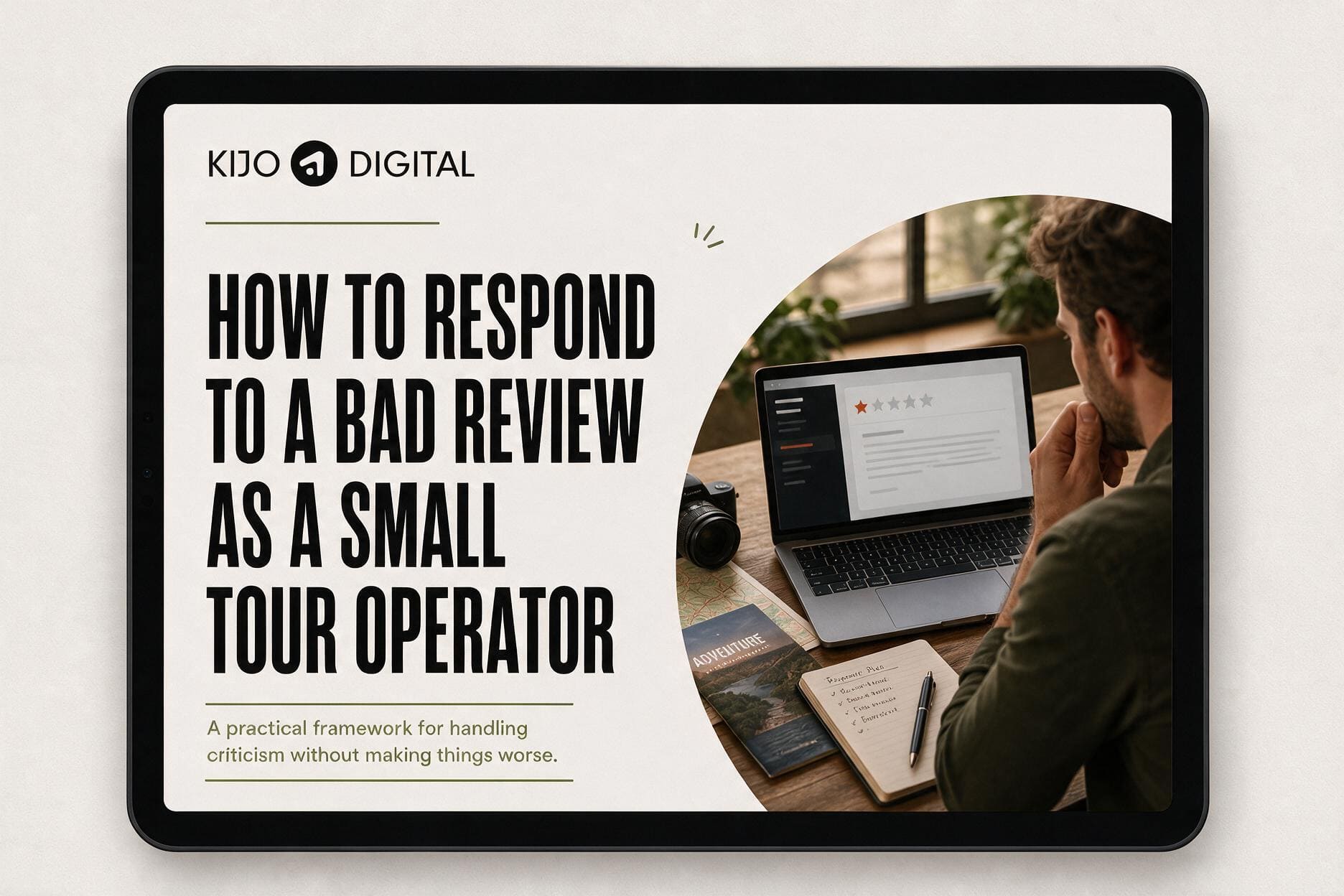
Respond calmly and specifically, acknowledge the issue without being defensive, and state what you did or will do about it. Future travellers read your response as closely as the review itself, so a measured reply usually does more good than the original complaint does harm.
A negative review, especially one that feels unfair or exaggerated, triggers a natural urge to explain, correct, or push back. That instinct is understandable, and it’s almost always the wrong move to act on immediately. A defensive reply reads to every future traveller as an operator who can’t take feedback, regardless of how justified the defensiveness actually is.
The review itself is a single data point. Your response is the pattern every future reader actually judges you on.
Open by acknowledging they took the time to share feedback, even negative feedback. This isn't about agreeing with everything they said, it's about setting a tone that reads as receptive rather than combative from the first line.
Reference the actual complaint, not a generic apology template. A specific response shows you actually read and understood what went wrong, which is far more convincing to a future reader than a vague "sorry for your experience."
A concrete fix or change, even a small one, shows the review led to something useful. This is often the single most persuasive line in the whole response, since it reassures future travellers the issue won't repeat.
Offer a direct contact for anything that needs more detail than a public reply allows. This shows good faith without turning the public thread into a back-and-forth.
“A calm, specific response to a bad review often reassures a future traveller more than a page of five-star reviews does.”
"Thank you for the honest feedback, and I'm sorry the pickup time wasn't communicated clearly on the day. We've since updated our confirmation email to include a direct contact number for exactly this kind of last-minute change. If you'd like to discuss it further, please reach out to us directly, we'd genuinely like to make it right."
Notice what this response doesn’t do: it doesn’t argue with the traveller’s account, doesn’t over-explain, and doesn’t sound rehearsed. It’s short, specific, and shows a real change.
We help operators build review response templates that stay genuine and specific, without starting from a blank page every time, free to discuss on a call.
Never argue publicly with the traveller's version of events, even if you genuinely disagree. Never use a generic, copy-pasted apology that clearly wasn't written for this specific review. Never respond while still visibly upset, a defensive tone is easy to spot and hard to walk back once it's posted publicly for anyone to read.
If the situation genuinely needs more detail, a refund discussion, or anything that shouldn’t play out publicly, say so briefly in the public reply and move the rest of the conversation to email or phone. This protects both the traveller’s privacy and your own ability to resolve it properly without an audience.
Yes, in almost all cases. An unanswered negative review reads as unresolved, while a calm, specific response shows future travellers the issue was taken seriously, regardless of how the original review was written.
Only if it genuinely breaches Google's policies, such as being fake, abusive, or unrelated to an actual experience with your business. Requesting removal of a review simply because it's negative rarely succeeds and can look defensive if travellers notice.
Within a few days is generally reasonable. Responding too quickly while still upset can result in a defensive tone, while waiting too long can look like the business isn't paying attention to its reputation.
Yes. Future travellers reading your profile pay close attention to how you respond, often more than to the original complaint itself, so a measured, professional reply can do more good than the review does harm.
I design and build conversion-focused websites for travel, hospitality and trade businesses, and I've set up bookings on all of these systems, WooCommerce most of all. This comparison reflects what actually works on real operator sites, not vendor marketing.
Book a free 30-minute strategy call. We'll look at your current review profile and help you build a response approach that actually works.
Book a free strategy call →